The first impression
A wider table scene can express hospitality, time of day and the character of a place. Describe the light and materials that belong to your restaurant.
Bloopo helps you create restaurant and food campaign concepts from real references. Explore the place, the plate and the feeling of being there, then refine the image in chat.
Choose a plan. Your workspace opens after checkout.
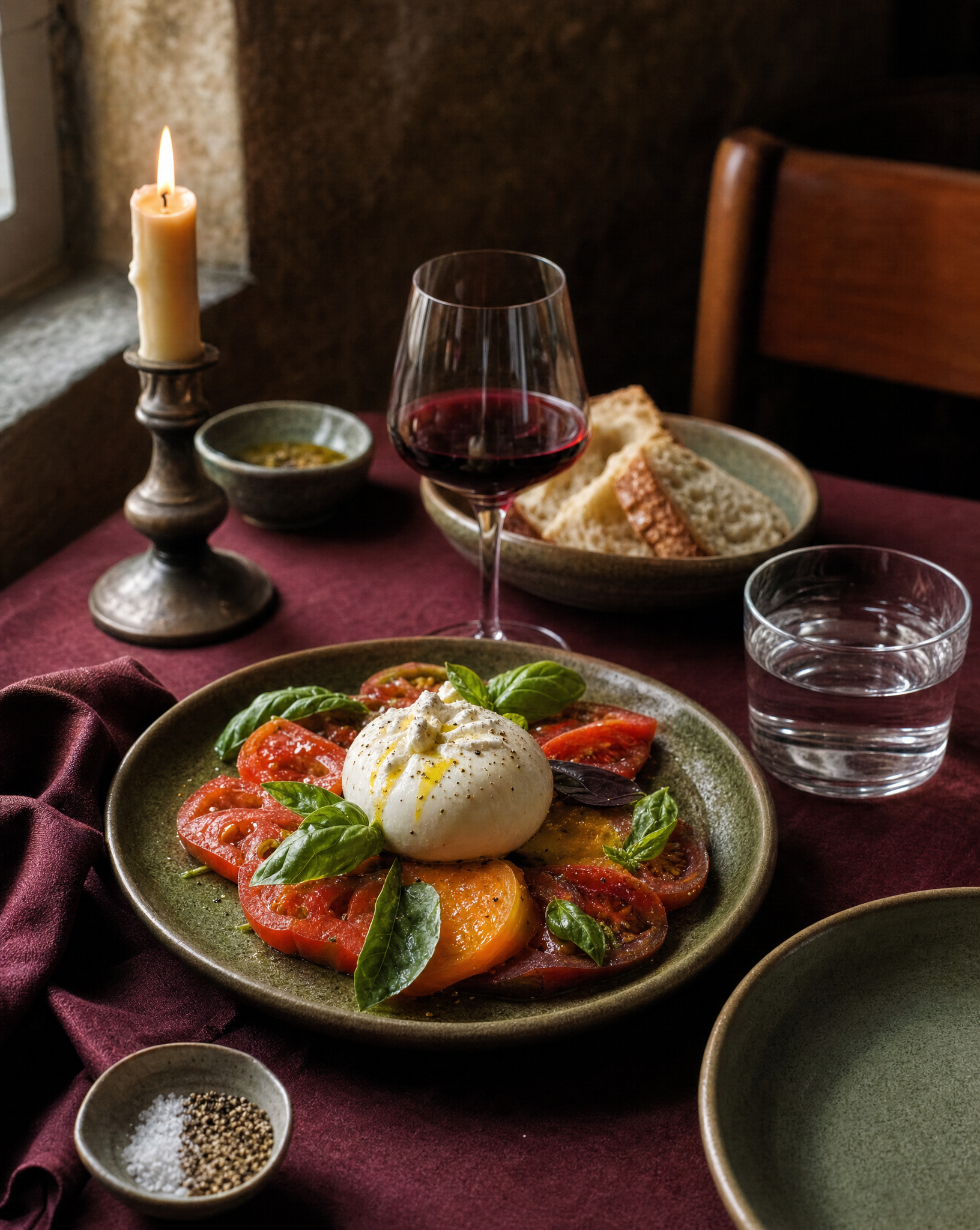
Food imagery can communicate a whole occasion. Give each composition a role in the story.
Accurate references make the creative conversation more useful.
Provide dish, product or venue references. Name the occasion and the details that should not be invented.
Discuss the table, surfaces, light and framing. Decide whether the image is an atmospheric campaign concept or a close product representation.
Check food texture, tableware, portions and spatial logic. Ask for a targeted revision and choose the result that suits its intended use.
Start with the occasion and the mood. Add your real dishes, ingredients and venue references in chat.
Help me create a restaurant campaign concept around an intimate evening table. Warm directional light, tactile linen and an inviting composition. Ask for venue and dish references before preparing the image.
Start with this brief ↗Help me develop a seasonal food still life. Ask which ingredients and dishes are actually part of my offering, then suggest a focused palette and natural tabletop setting.
Start with this brief ↗Help me create an editorial breakfast or coffee campaign concept. Gentle morning light, believable ceramics and a quiet atmosphere. Ask for the product references and intended use.
Start with this brief ↗A dinner launch, a seasonal menu or a familiar morning ritual each deserves a different visual treatment.
Yes. Upload references and explain which details matter. They help communicate your venue and food, but generated results can alter portions, ingredients and surroundings. Review carefully before publishing.
Use extra care when an image represents a dish someone will order. Compare the result with the real offering. Concept imagery is useful for atmosphere, while an accurate menu photograph should faithfully represent the actual food.
Yes. Discuss tablescapes, hospitality atmosphere, product still lifes and seasonal campaign concepts. Describe the scene and provide references rather than expecting the chat to infer your venue or menu.
Choose a monthly or six-month plan and complete payment before setting up your account. Plans include credits for images, video and sound. Existing customers can sign in with their current access.
Another direction for your next creative.
Bring a reference, a question or a direction you want to explore.
Choose a plan · Create after checkout